Mixing & Mastering the Sound Policy Podcast

I mixed and mastered 13 episodes of Sound Policy, FM’s podcast, for Bravo Charlie Delta: edited tracks in, a finished master out.

In March 2026, Josh Backer at Bravo Charlie Delta asked if I could help with some podcast audio sweetening for one of their clients. The client was FM and the show was Sound Policy, FM’s podcast about the risks modern businesses face and the strategies to overcome them. I turned the first episode around in a day, and between April and September, 13 episodes went out with my mix and master on them.

FM, formerly FM Global, is a Fortune 500 mutual insurance company headquartered in Johnston, Rhode Island. Founded in 1835, it insures the property of large businesses around the world and specializes in loss prevention.

HOW IT WORKED

Each episode was recorded, cut by the show’s editors and reviewed by FM, legal team included, before it came to me as a set of edited tracks. I did the final mix and master, what film and television call the re-recording mix, and sent a finished master back to the editor for FM’s approval, on a two week cycle.

Some episodes came in clean and some didn’t, from a reflective room on the host’s microphone to a remote guest whose recording arrived with much of its detail missing, and tracks with crosstalk between microphones; sorting that out is part of the job.

“Timing of service and the quality of the product are great from my POV.”

Josh Backer, Bravo Charlie Delta, to the show’s post-production team, July 2026

LISTEN

  1. How resilient is your country? Breaking down the 2026 data (April 7)
  2. How AI and technology could transform insurance claims (April 21)
  3. What manufacturers need now to build resilience (May 5)
  4. Manufacturing resilience in a changing global landscape (May 26)
  5. Risk, resilience, and salty snacks with Utz Quality Foods’ Staci Smith (June 9)
  6. The growing cost of hail (June 23)
  7. Inside FM’s new report on power generation losses (July 7)
  8. Why FM’s chief investment officer calls the market this year ‘anti-fragile’ (July 22)
  9. Digging into losses in the mining industry (August 4)
  10. Four qualities of a well-protected data center (August 18)
  11. Risk, resilience, and the hidden cost of disruption (September 1)
  12. How power markets are evolving, with Marsh’s Mike Kolodner (September 15)
  13. Designing resilience into digital infrastructure (September 30)

For what working together looks like, see Podcast Mixing and Mastering: What Happens Between the Edit and the Release.

CREDITS

Mixed and mastered by Andrew Freeborn Creative for Bravo Charlie Delta
Sound Policy is produced for FM by Bravo Charlie Delta

If your podcast needs mixing and mastering, I’d love to give it a listen: creative@andrewfreeborn.com


Podcast Mixing and Mastering: What Happens Between the Edit and the Release

What podcast mixing and mastering does for your show: what to send, what changes, and what you get back, ready to publish.

Most people can’t tell you what’s wrong with a badly mixed podcast; they just stop listening. A voice that’s suddenly louder than the one before it, a room that rings after every sentence, music that buries the guest… none of it is dramatic on its own, and all of it adds up to a show that’s work to listen to. Mixing and mastering is the step that takes that work away.

I’ve been recording, producing and mixing podcasts for about a decade, most recently 13 episodes of Sound Policy, the podcast from FM (formerly FM Global), and this is what working together looks like.

WHAT YOU SEND

Your finished cut of the episode as separate tracks, one per microphone, with the music and any sound effects, your editor’s rough mix, and notes on anything that’s bothering you.

THE AUDIO EDIT

This is where things get fixed before anything gets mixed. Bleed from one microphone into another comes out, and anything that needs surgery gets it: background noise, hum, clicks, a room that rings. I use the iZotope RX tools for this work.

THE MIX

In film and television, the final mix where dialogue, music and effects come together is called the re-recording mix, and a podcast needs the same job done. Every voice comes out clear and even, and the music sits under the conversation instead of fighting it.

WHAT YOU GET BACK

A finished master with balanced tone, maximized volume, and K-scaled output for the specific streaming platforms it’s headed to, like Apple Podcasts, Spotify and YouTube. It’s ready to upload or to drop back into a video edit, with revisions if something needs a nudge. On Sound Policy, that meant a finished master back to the editor and on to FM for approval every two weeks; you can hear the results in Mixing & Mastering the Sound Policy Podcast.

If your podcast needs mixing and mastering, I’d love to give it a listen: creative@andrewfreeborn.com

Exploring Orbis Analysis: A Systematic Approach to Product Development

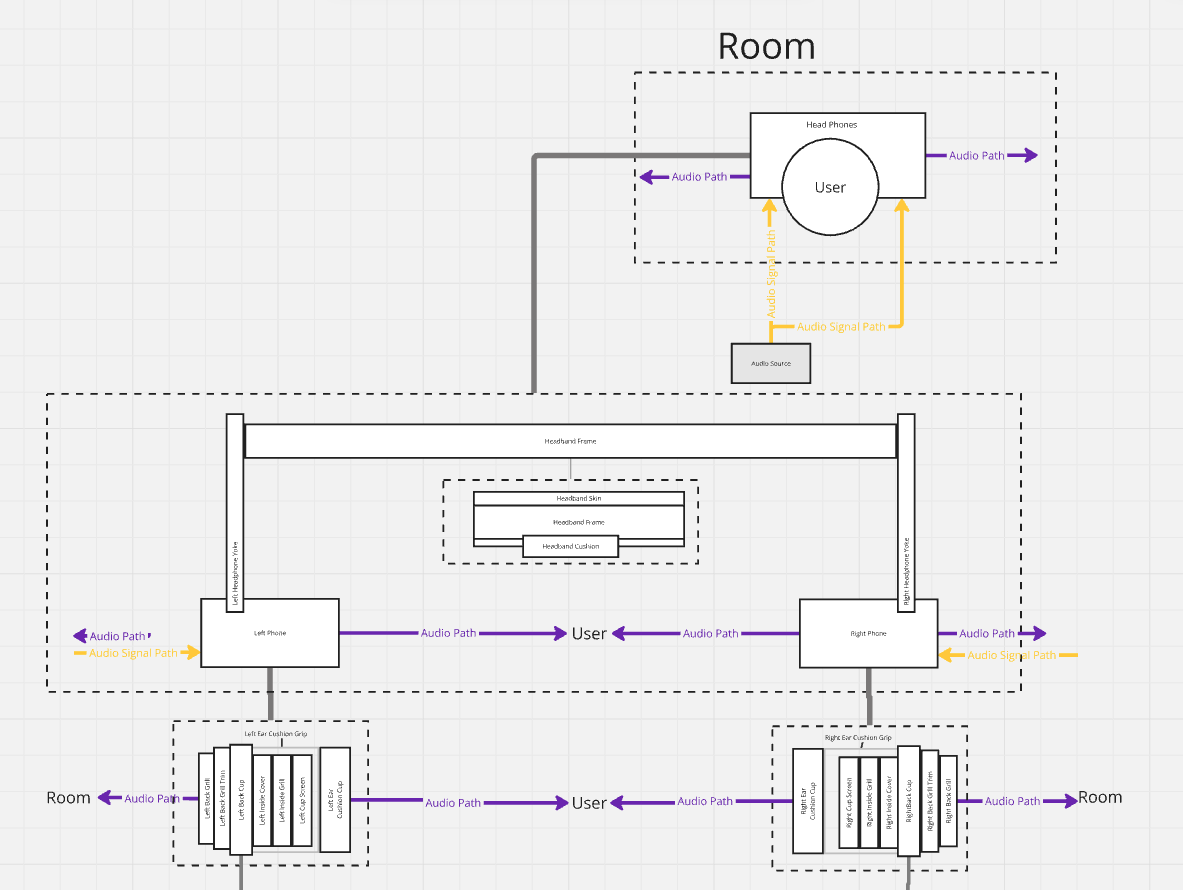
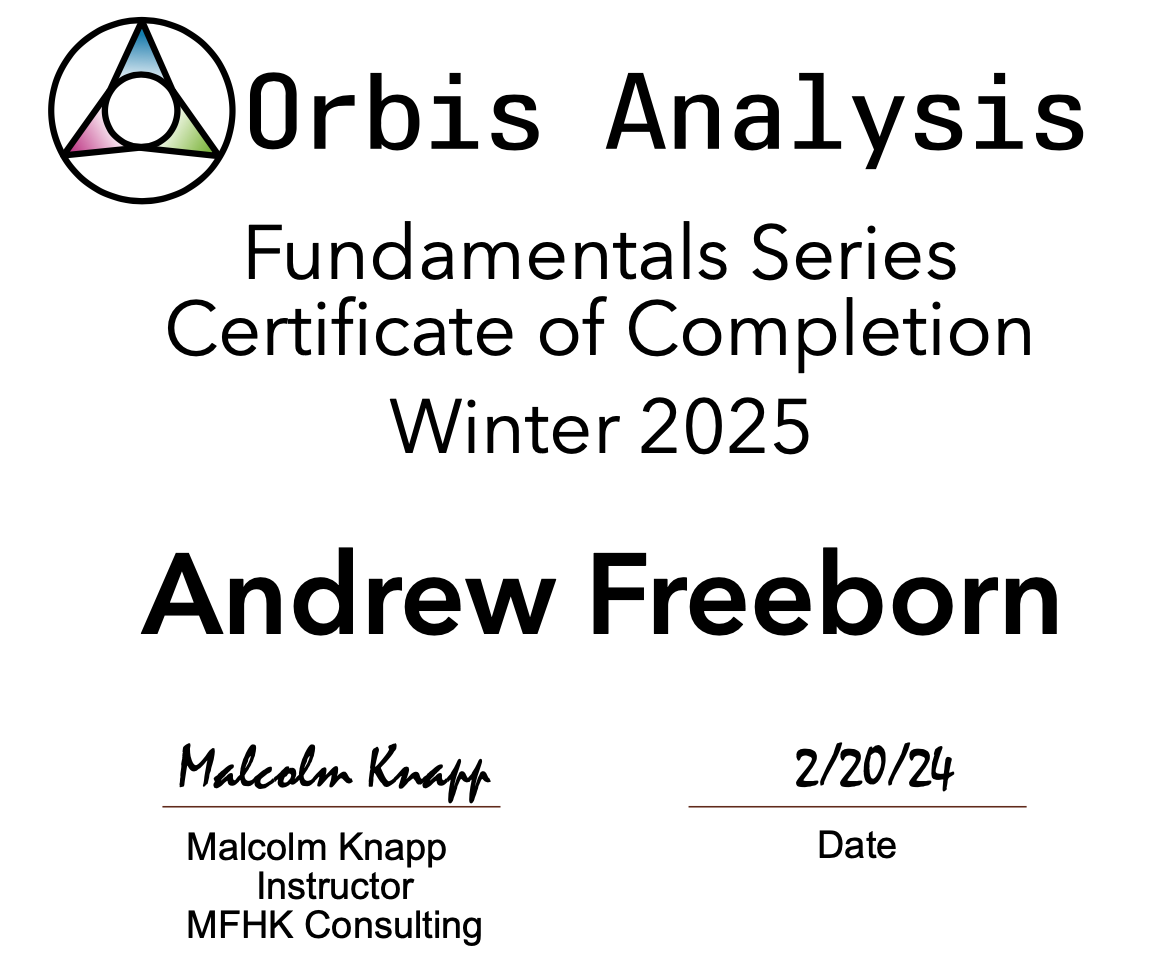
I recently earned a certification in Orbis Analysis, a structured approach to product development designed by Malcolm Knapp. This system provides a way to take a product idea and systematically break it down into four key elements:

  1. Schematic – A detailed diagram illustrating the product’s structure and components.
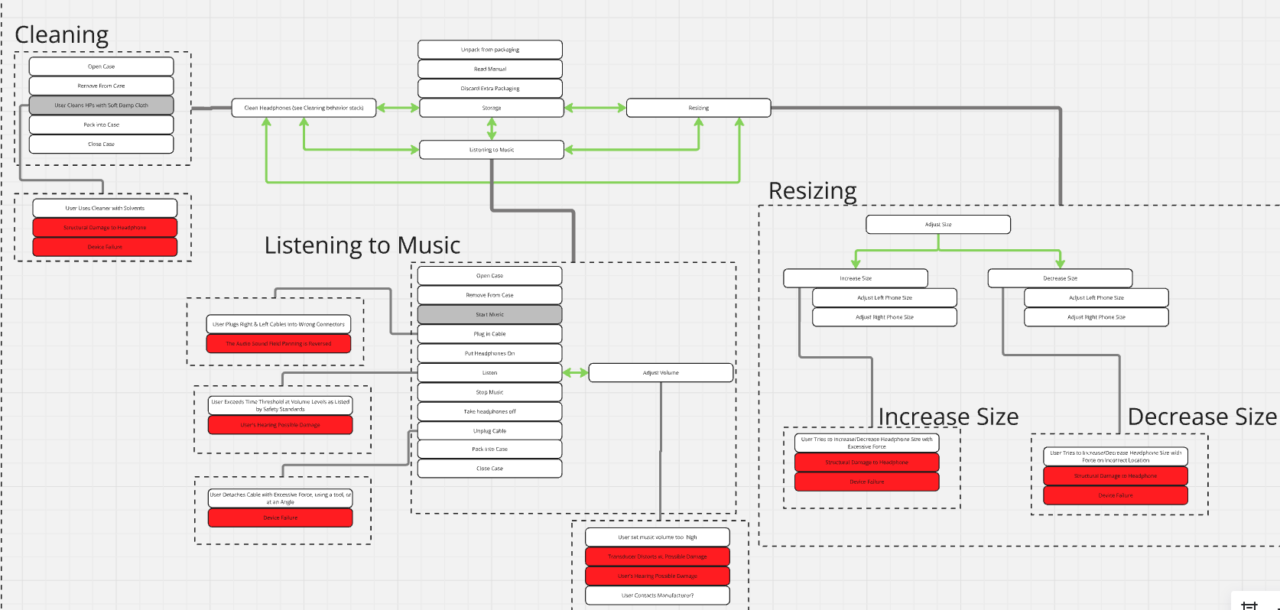
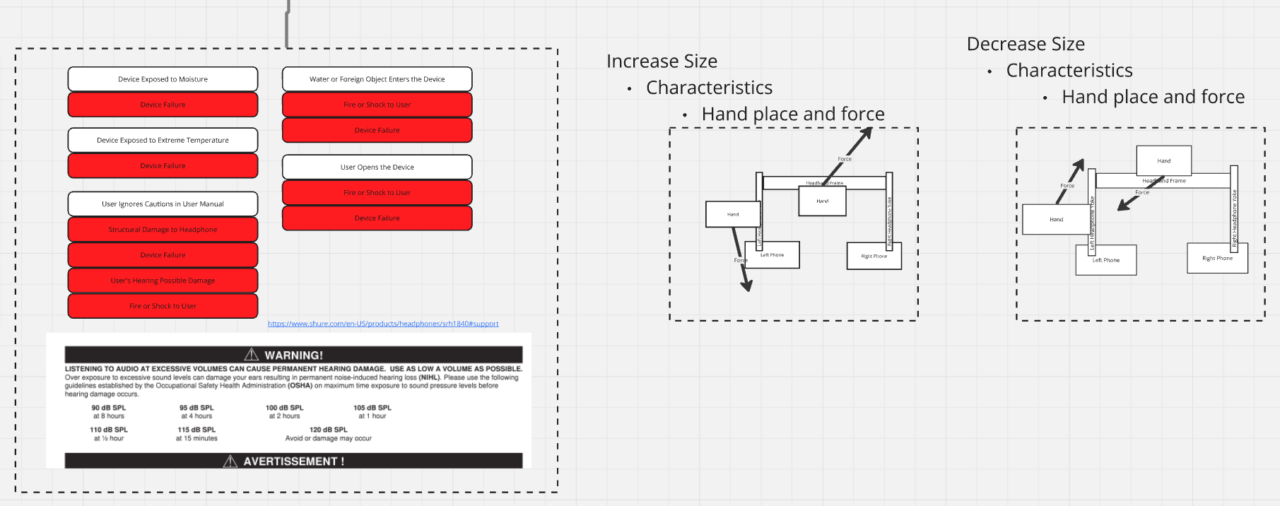
  2. Behavior Flow Chart – A visual representation of how the product functions in different scenarios.
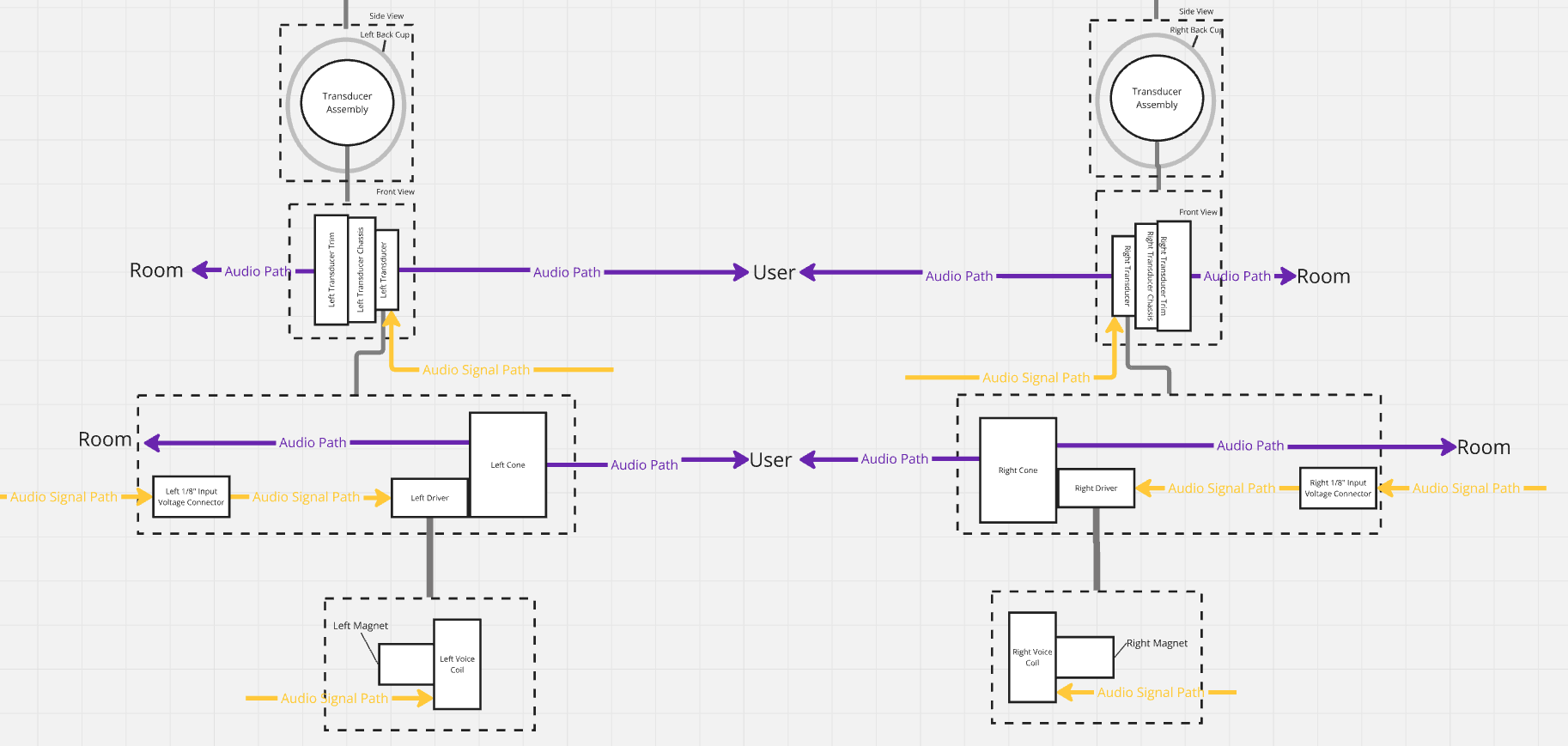
  3. System of Connections – A complementary diagram showing how various components interact in ways that the schematic alone cannot convey.
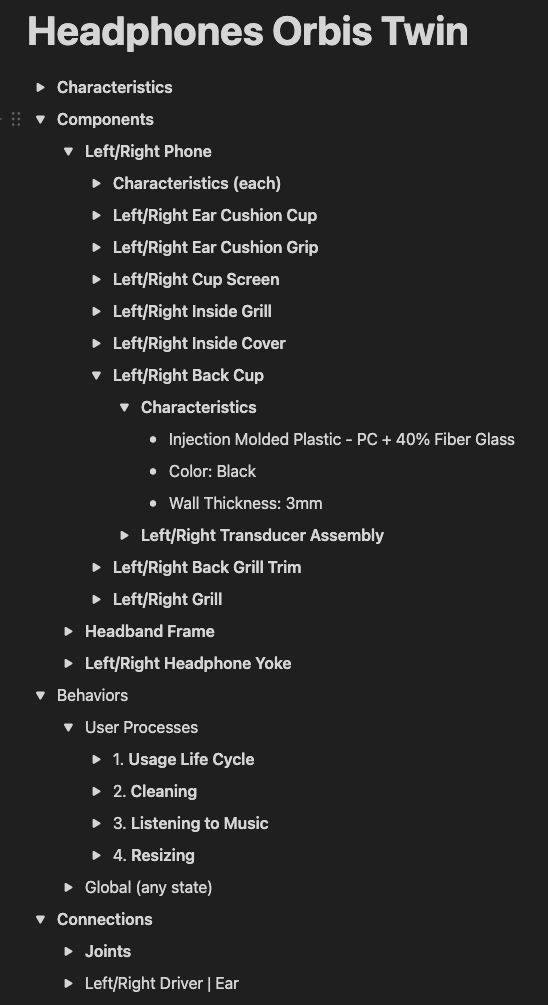
  4. Hierarchy List – A nested breakdown of the product, organizing its assemblies and subassemblies in a structured manner.

For my certification project, I applied Orbis Analysis to a real-world product: my open-back Shure SRH-1840 headphones. This exercise provided valuable insights into the intricacies of product design and demonstrated how this method can enhance the early stages of development.

Breaking Down the Shure SRH-1840 Headphones

Schematic: Visualizing the Product’s Structure

The first step was creating a schematic representation of the headphones. I was surprised by the complexity required to fully illustrate the design. The process involved encapsulating different assemblies and using breakout diagrams to show how components fit together. This detailed visualization proved invaluable in understanding the scope of the product and the relationships between various elements.

Behavior Flow Chart: Mapping Functional Interactions

Next, I developed a behavior flow chart, outlining how the headphones operate based on their user manual. This step initially felt uncertain, but referencing the manufacturer’s documentation provided clarity. This process reinforced the importance of defining a product’s expected behaviors before diving into detailed design work.

System of Connections: Understanding Component Interactions

The system of connections expanded on the schematic by illustrating relationships that a static diagram cannot fully capture. This was particularly useful in identifying dependencies and potential design constraints early in the process.

Hierarchy List: Organizing Components Logically

Finally, I created a hierarchical breakdown of the headphones. While this was a tedious step, it helped clarify the technical specifications of each component. This structured approach aids in selecting off-the-shelf components and designing custom elements where necessary. Additionally, it provides a solid foundation for the bill of materials (BOM) and understanding parent-child relationships in a product’s architecture.

Key Takeaways: Advantages and Limitations

The Orbis Analysis method offers significant benefits for product development, especially in the early stages:

  • Uncovering Roadblocks Early – By mapping out every component and interaction beforehand, potential design challenges become apparent before significant resources are invested.
  • Facilitating a High-Level Perspective – This approach allows teams to begin developing a product without needing immediate input from all technical disciplines.
  • Aiding BOM Creation – The hierarchy structure naturally leads into a well-organized bill of materials, streamlining procurement and manufacturing planning.

However, one limitation I found was that Orbis Analysis is platform-agnostic. While this flexibility can be useful, having a proprietary platform to structure the four pillars systematically could enhance usability and adoption.

Final Thoughts: Strengthening Product Development & Project Management Skills

As a project manager, I see immense value in Orbis Analysis for laying out a product vision before diving into the details. It helps bridge the gap between concept and execution, making it easier to align teams and resources effectively.

I hope this certification will further demonstrate my product development and project management capabilities. My goal remains to work in music technology, and this structured approach aligns well with the complexities of audio hardware design.

If you’re involved in product development or project management, I highly recommend exploring Orbis Analysis. It’s an excellent framework for ensuring a solid foundation before moving into detailed design and production.